Don Kowalewski
Writer. Ad Sales and Marketing. Social Media Content Creator. Aeropress Coffee. Makes the best salsa in the world.
Let’s Stop Using Hypophora (If You’re Not Going to Use it Correctly)
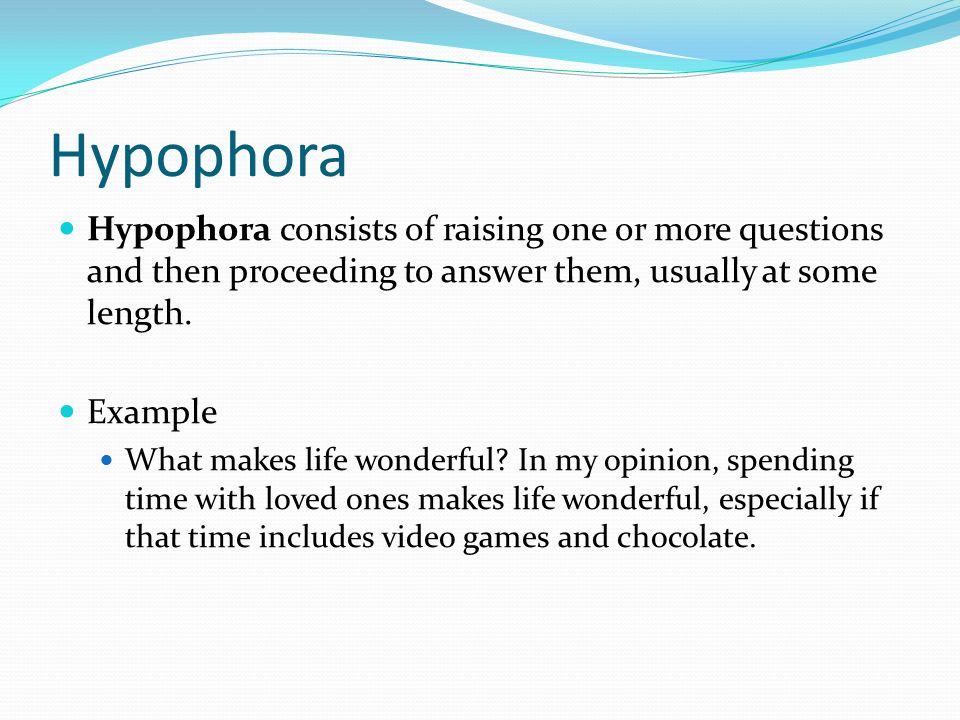
In 2025, let’s stop using hypophora in speaking and writing – unless you do it correctly.
See what I did there? I wrote a clear, concise statement of opinion.
Too many people, in real life, are using hypophora or anthypophora – figures of speech in which the speaker poses a question and then answers the question – in weak and unnecessary ways. Further, way too many “professionals” on radio, television, and especially Podcasts use hypophora to such an extent, it sounds like word-salad and makes it hard for the listener. Which is me.
This next paragraph begins with hypophora, but done correctly.
Can hypophora be clever and useful?? According to Ultius, a writing website, hypophora can enable the speaker or writer to anticipate the listeners’ concerns and then address them within the context of the speech or written piece.
But that’s not why I have this pet peeve against hypophora.
A sports radio host recently strung together this sentence…
“Do I think the Packers have a chance against the Eagles? Yes, I think the Packers have a chance against the Eagles. Will it come down to Jordan Love playing the game of his life? Yes, it will mean Jordan Love will have to play the game of his life. Will Jalen Hurts need to play his best game? No, Jalen Hurts will only need to play a good, not great, game, and limit turnovers.”
Aside from that being hyperbole and lacking any specificity, it’s three straight hypophora and served only to fill space. A competent speaker with something to say would only say…
“The Packers are longshots, but if Jordan Love plays the game of his life, they can beat the Eagles. On the other side, Jalen Hurts just needs to limit turnovers and play a C+ or B- game.”
I’ll forgive radio, TV, and Podcast hosts a little. They are asked to create hours and hours of conversation and analysis, and they’re adlibbing and freestyling at times, so sometimes we’re getting their own internal dialog while they form their opinion and craft their story in real time.
Worse is when real people, in real life, in real conversations, use hypophora unnecessarily. I won’t say who said the following while on the phone with me recently, but let’s just say I wanted to stop this person and ask them, please, just tell me what you think and what happened.
“Am I happy with what happened? No, I’m not happy with what happened. Do I feel like I’m going to be alright at the end of the day? Yes. I think I’ll be OK when all is said and done. Am I going to take a break from social media for a little while? Yes, I’m going to take a break from social media for a while.”
As I said, there is a correct way to use hypophora and it can be powerful.
“After all, what’s a life, anyway? We’re born, we live a little while, we die. A spider’s life can’t help being something of a mess, with all this trapping and eating flies. By helping you, perhaps I was trying to lift up my life a trifle. Heaven knows anyone’s life can stand a little of that.” (E.B. White in Charlotte’s Web)
“What should young people do with their lives today? Many things, obviously. But the most daring thing is to create stable communities in which the terrible disease of loneliness can be cured.” (Kurt Vonnegut)
In fact, SmartBlogger pointed out Dr. Martin Luther King’s “How Long? Not long!” speech used a great deal of hypophora, but used it in a powerful, rehearsed, interesting way.
My mission here is simple. If you have something to say. Say it. State your opinion. Make a statement of fact. Don’t use hypophora as a crutch.
It can be used to great effect, but hypophora is not meant for everyday conversations and it doesn’t make you more interesting than if you simply say what you mean to say.
Do I appreciate you reading and considering eliminating hypophora from your speaking and conversations? That was rhetorical.
Help me make the world a little less hypophoric.
 Don Kowalewski